Tea and Chocolate

We’re exploring pairing tea and chocolate today with Debbie Raab, co-owner and co-founder of the unique and delightful Tea for All in Lawrence, New Jersey.

One of the things that makes Tea for All unique is its location inside the Trenton Farmers Market, the longest-running indoor farm market in New Jersey. Before delving into the pairings, Debbie shares with us a bit of the history of Tea For All and the tea journey she and her husband Mike Raab (Tea For All’s other co-owner and co-founder) have taken, as we discuss Debbie’s approach to teaching about tea and to creating and experimenting with pairings.

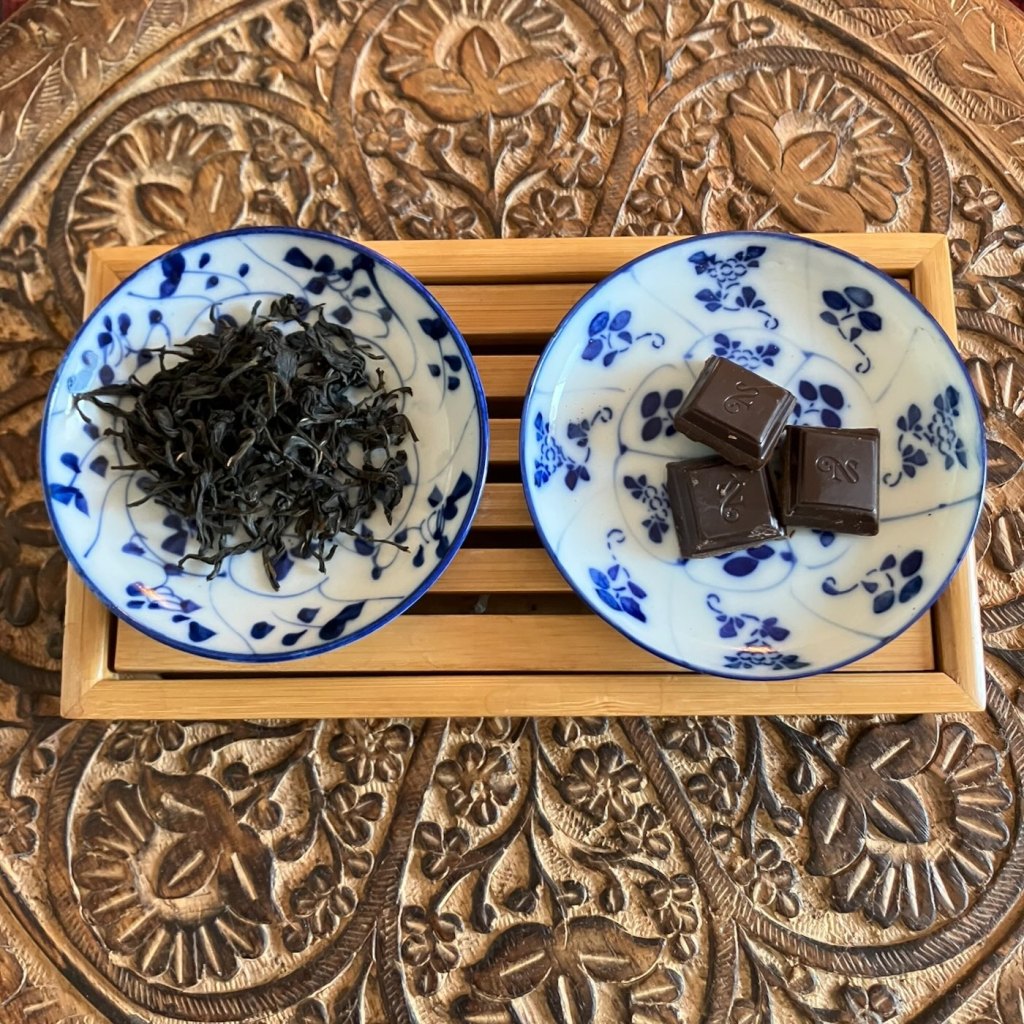
Debbie chats with us about her view of the importance of trial and error in exploring and experiencing tea and tea-chocolate pairings and her preferences for choosing chocolates for pairing , and then begins the pairings themselves. We taste six tea and chocolate pairings in all. During the pairings, we talk about the differences between pairings that contrast, pairings that complement and pairings that enhance the flavors of the tea and the chocolate, different methods for tasting the teas and the chocolates, and how tea and chocolate pairings can lead to new discoveries about the flavors and textures of our teas. And Debbie also tells us about some of Tea For All’s ongoing and periodic events, classes and tea practice sessions.

For easy reference for trying these or similar pairings at home, the time marks for the teas and types of chocolates (by cacao percentage) we paired are:

11:05:   58% cacao paired with a gyokuro kukicha (Tea For All’s Kukicha Supreme), followed by the same chocolate paired with Doke Black Fusion, a black tea from Bihar State, India.

21:21:   60% cacao paired with Ganesha Green, a Nepali green tea from the Kanchanjangha Tea Estate, followed by the same chocolate paired with Chota Tingrai Assam black tea from Assam, India.

30:50:   71% cacao paired with a black tea from the town of Volcano on the Big Island of Hawaii (Tea For All’s Hawaii Volcano Premium Black).

36:25:   72% cacao paired with a Bao Zhong from Taiwan.

During the pairings we took some time between tasting the chocolates and tasting the teas to allow Debbie to brew the tea and to allow the flavors of the chocolate to settle in the mouth, and sometimes to take a palate cleanser (Debbie used small tidbits of celery). You won’t hear these gaps in the podcast, but you may want to take these pauses if you’re doing the pairings at home. 

Tea for All is located in the Trenton Farmers Market, 960 Spruce Street, Lawrence NJ. Hours, event information and Tea For All’s online store are on its website, tea-for-all.com. You can find Tea For All on Instagram and and Facebook feeds at Tea-For-All Tea Shoppe.

Follow Talking Tea on Facebook or on Instagram  at talkingteapodcasts

Talking Tea is produced and hosted by Ken Cohen. 

more about Talking Tea 

The views and opinions expressed by guests on Talking Tea are those of the guests and do not necessarily reflect the views or opinions of Talking Tea or its staff.

This podcast features music from “Japanese Flowers” (https://soundcloud.com/mpgiii/japanese-flowers) by mpgiiiBEATS (https://soundcloud.com/mpgiii) available under a Creative Commons Attribution 3.0 Unported license (http://creativecommons.org/licenses/by/3.0/). Adapted from original.

Header image “Raw Puerh mid 1980 Menghai” by Cosmin Dordea, used under a Creative Commons CC By-SA 2.0 license. Adapted from original.
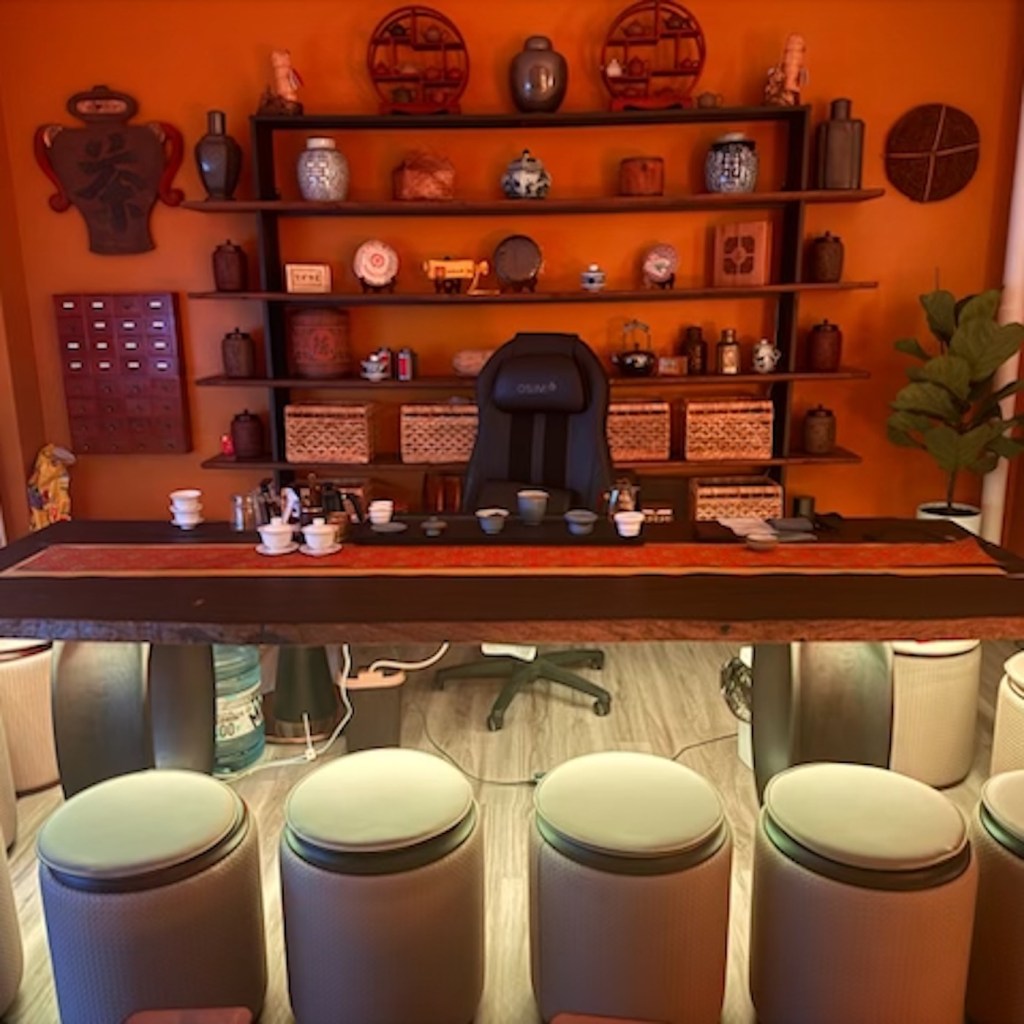
The NYTS Tea Studio, Sharing Gongfu Tea and Community

We’re very excited to be at the New York Tea Society’s new Tea Studio in midtown Manhattan, chatting with NYTS’ founder Roy Lamberty. 

Roy was a guest on Talking Tea in 2018 and he’s back today to talk with us about how NYTS has evolved since our earlier episode, and how its beautiful new Tea Studio came to be. Roy tells us about his experiences around gongfu tea tables in China, and his vision of building those experiences into a tranquil, communal tea space in New York City. We chat about the studio as a space to have tea on your own or around a communal gongfu table, its aesthetics and design elements, the studio’s location in New York’s Koreatown, and Roy’s very successful work in building community through tea. We also delve into the sourcing of some of NYTS’s very unique tea offerings. Roy talks with us about the lineup of events and themed sessions at the tea studio, and the NYTS tea education programming at the studio and through the NYTS online virtual tea group and its programs. We also discuss NYTS’ optional membership plans and its online tea market.

NYTS teas and teaware are available for purchase at the tea studio and through its online tea market.

Information about the tea studio, directions, hours and reservations, and the NYTS online offerings are on the NYTS website

Follow Talking Tea on Facebook or on Instagram  at talkingteapodcasts

Talking Tea is produced and hosted by Ken Cohen. 

more about Talking Tea 

The views and opinions expressed by guests on Talking Tea are those of the guests and do not necessarily reflect the views or opinions of Talking Tea or its staff.

This podcast features music from “Japanese Flowers” (https://soundcloud.com/mpgiii/japanese-flowers) by mpgiiiBEATS (https://soundcloud.com/mpgiii) available under a Creative Commons Attribution 3.0 Unported license (http://creativecommons.org/licenses/by/3.0/). Adapted from original.

Episode image of the gongfu tea table at the New York Tea Society Tea Studio,  by Roy Lamberty. Adapted from original.

Header image “Raw Puerh mid 1980 Menghai” by Cosmin Dordea, used under a Creative Commons CC By-SA 2.0 license. Adapted from original.

Tea as Daoist Meditation, with Robert Coons

After nearly a year hiatus from releasing new episodes, and nearing what’s hopefully the end of a worldwide pandemic, we’re very happy to welcome back Robert Coons to talk with us about tea as a medium for meditation and health, from a Daoist viewpoint. Robert is a well-known teacher and writer on Daoist meditation, a tea vendor, an acupuncturist and practitioner of qigong and martial arts,  and was our guest two years ago in our episode “Tea & Daoism: Adjacent Connections”. He’s about to launch an online course on tea meditation, so we took this opportunity to get an overview of Robert’s perspectives on tea as a meditation practice.

Read more: Tea as Daoist Meditation, with Robert Coons Continue reading “Tea as Daoist Meditation, with Robert Coons”

Bamboo Pu’er, Beyond the Novelty

There’s a certain novelty factor to bamboo pu’er – sheng or shou pu’er packed and (usually) aged in a bamboo tube. It’s not the way we usually acquire our pu’er, and it can be both challenging and fun to crack open the bamboo log and see what’s inside. But aside from the novelty, are bamboo pu’ers worth exploring for serious tea drinkers?

To look inside the bamboo log a little more deeply, we’re joined once again today on Talking Tea by John Wetzel, founder and owner of Stone Leaf Teahouse in Middlebury, Vermont. Specifically we’re focusing on one bamboo pu’er, a 2016 sheng from Naka Shan. 

Continue reading “Bamboo Pu’er, Beyond the Novelty”

Tea & Daoism: Adjacent Connections

5044000541_6f3894e969_o

Today we’re exploring connections between tea and Daoism, the millenia-old Chinese religious and philosophical tradition that has had such a profound influence on culture and history in and beyond China. We’re joined by Robert Coons, who straddles both the tea world and the world of Daoism. Robert is a well-known tea vendor based in Canada and China and is also a writer, teacher and podcaster on Daoism, qigong and Daoist meditation.   Read the full show notes

Talking Teapots, In-Depth with Scott Norton

IMG_4063

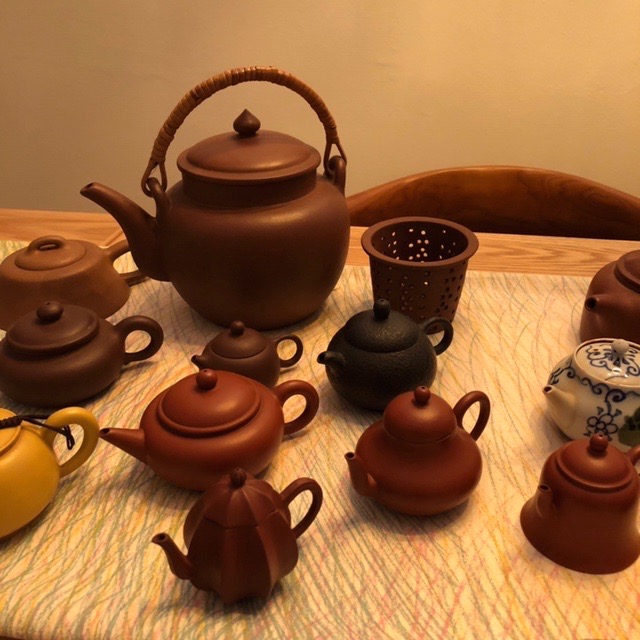
When a listener requested an episode about teapots. we realized that this was a topic we haven’t really delved into on Talking Tea. And having attended one of tea blogger, writer and teacher Scott Norton’s incredibly comprehensive seminars on yixing teaware, we invited Scott to join us for an in-depth overview of teapots, their design elements, their history and how to best match your teapots with your teas.  Read the full show notes

Growing a Tea Meetup

TT Roy photo meetup (1)

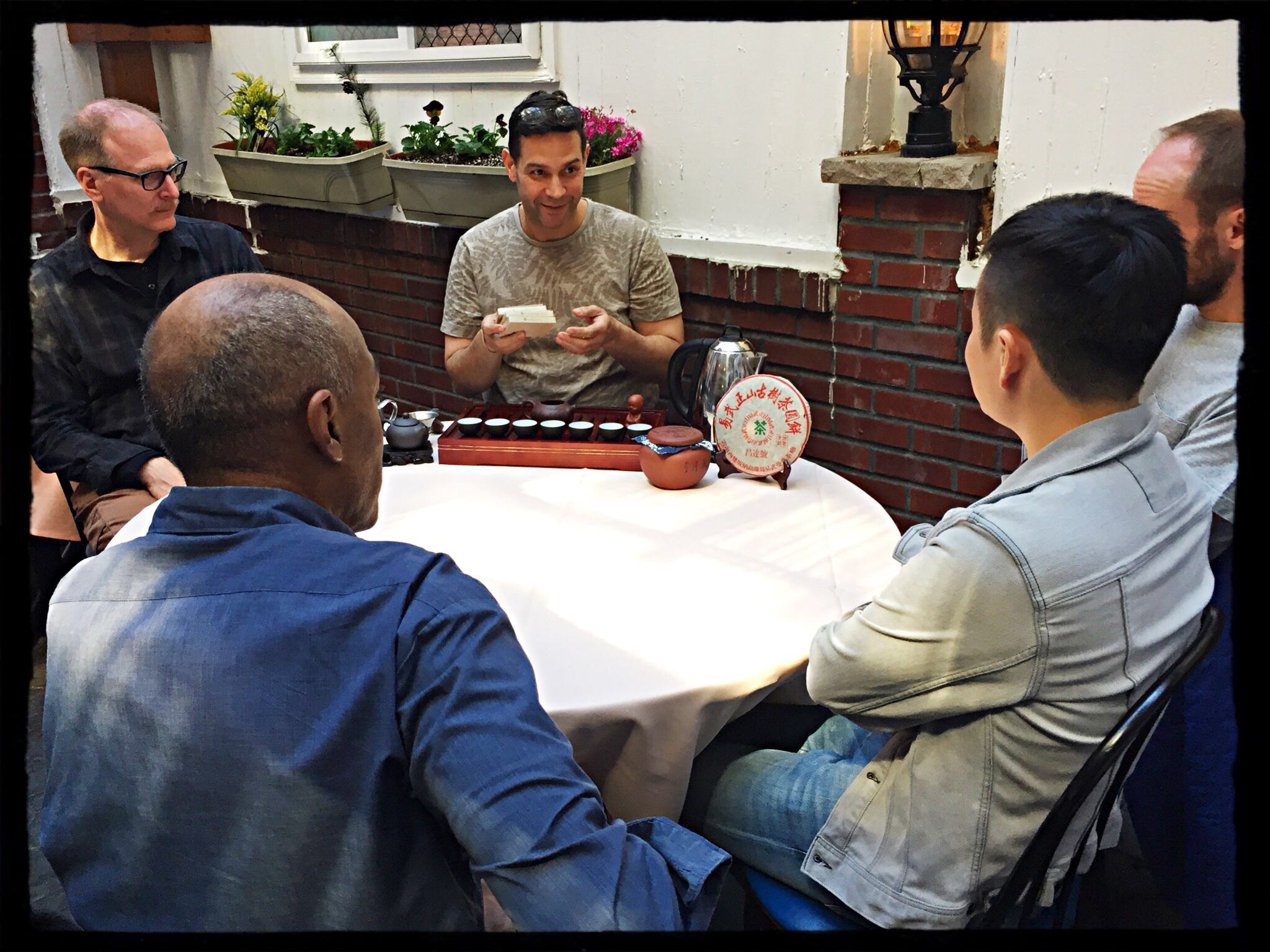
One of our guiding principles here at Talking Tea is that conversations about tea and tea culture have the power to deepen our understanding and enhance our experience of tea. Today on Talking Tea we’re exploring one of the ways people are increasingly coming together to share and talk about tea: tea meetup groups. We’re joined by Roy Lamberty, founder and organizer of the New York Tea Society, a popular tea meetup in New York City.  Read the full show notes

Tea Goes to College

An institute dedicated to intensive, interdisciplinary tea education and research is not something you’ll typically see at a college or university in North America – or anywhere else, for that matter. But it’s exactly what you’ll find at Penn State University in State College, Pennsylvania, where an initiative originally undertaken by students has resulted in the groundbreaking, university-funded Tea Institute at Penn State.  Read the full show notes

An Eclectic Path of Tea

This week Talking Tea is back in Philadelphia to chat with Rebecca Goldschmidt of Philly’s Random Tea Room & Curiosity Shop, one of the most eclectic tea shops we’ve encountered on our tea journeys to date. Rebecca talks with us about her own path of tea and her aim of providing a space for health and well-being, which come together to create the unique tea environment that is the Random Tea Room.  Read the full show notes